Sewer Line Repair in Baisley Park, Queens
When chronic sewage backups, foul odors, or multiple slow drains affect your basement, professional camera inspection and targeted sewer lateral repairs resolve underground drainage failures permanently.
- High-definition internal camera video locating
- Vitrified clay & cast-iron lateral repair
- NYC street connection & DEP compliance guidance
Underground Sewer Dynamics in Baisley Park & Queens
In residential areas throughout Baisley Park, South Jamaica, and Rochdale, underground sewer laterals channel all household wastewater from indoor plumbing stacks out to the city sewer main buried beneath the street. While branch drains inside a home can become clogged by soap or hair, a failure in the main underground sewer line causes widespread sanitary emergencies that affect every toilet, shower, and sink simultaneously.
Recognizing Main Sewer Line Compromise
A compromised sewer lateral displays distinctive warning signs before total blockage occurs:
- Simultaneous Multi-Fixture Stoppages: When running the washing machine or showering causes water to rise out of the basement toilet or floor drain, the main sewer line is failing to evacuate volume.
- Persistent Sewer Gas Odors: A cracked underground pipe allows noxious sewer gases (hydrogen sulfide) to escape the soil, rising into basements, crawlspaces, or front yards.
- Gurgling Fixtures: Air trapped behind a slow-moving sewer blockage is forced backwards through water traps, producing bubbling noises in toilets and sinks.
- Localized Foundation Moisture: Waste water leaking from broken foundation piping can soften basement concrete, causing persistent efflorescence and moisture staining.
Piping Materials and Common Causes of Failure
The construction era of a home largely determines the composition of its underground sewer line. Older Queens properties frequently feature extra-heavy cast-iron pipe beneath the foundation floor slab transitioning to vitrified clay tile pipe outside the foundation wall. In more recent construction or modernized properties, Schedule 40 PVC or ductile iron may be present.
Tree root intrusion represents the leading cause of clay pipe failure. As mature street trees search for moisture, microscopic root fibers penetrate through mortar joints or hub connections. Once inside, roots expand rapidly into thick fibrous bundles that snag toilet paper and solids. Over decades, cast-iron pipes also suffer from tuberculation—interior rust and scale that narrows the internal pipe diameter and catches debris.
For branch drain clogs located inside walls or under sinks, explore our drain cleaning services. If groundwater flooding accompanies sewer issues, review our sump pump & flood protection guidance.
Sewer Camera Inspection: Pinpointing the Problem
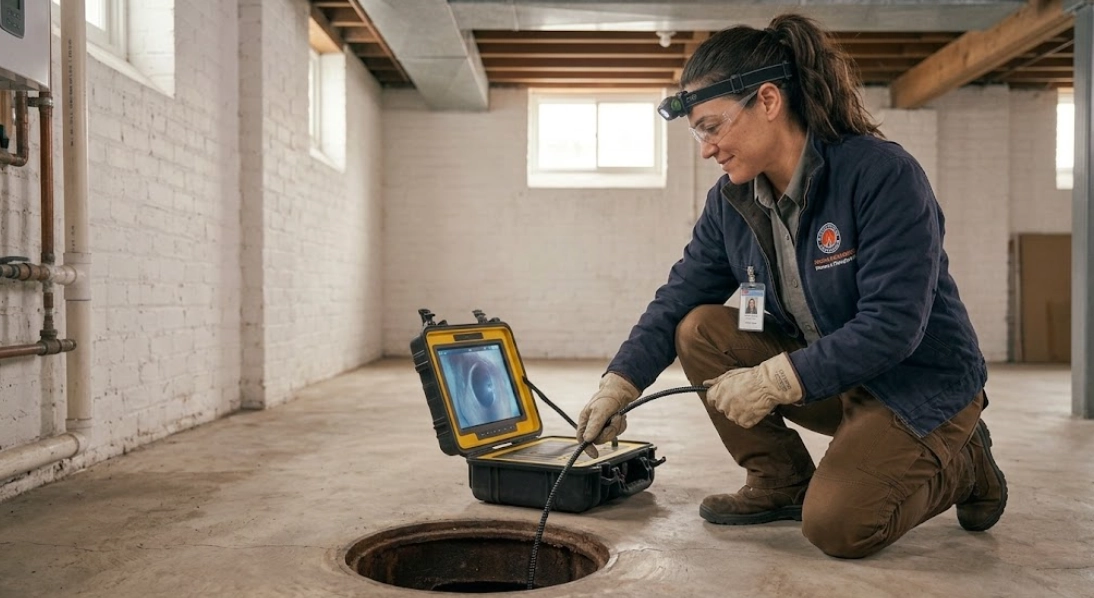
Guesswork has no place in underground plumbing. Inserting a fiber-optic video camera with an integrated sonde transmitter through the main house trap or basement cleanout allows technicians to inspect the interior pipe wall in real time. The camera identifies:
- The exact physical distance and depth from the foundation cleanout to the obstruction.
- The nature of the failure: offset clay joints, root intrusion, pipe collapse, or bellies (dips where standing water collects).
- Whether the problem is localized to private property (between the house and property line) or extends past the curb toward the municipal main.
| Defect Identified by Camera | Recommended Remediation Method | Permits & Site Access Requirements |
|---|---|---|
| Heavy Tree Root Infiltration | Hydro jetting & localized spot excavation | Yard cleanout access; plumbing permit for pipe replacement. |
| Cracked / Collapsed Clay Tile | Sectional excavation & PVC transition | NYC DOB permit; hand or machine excavation. |
| Severe Cast-Iron Tuberculation | Mechanical descaling or line replacement | Basement slab cut or exterior trenching. |
| Pipe Sag (Belly) / Poor Grade | Full grade re-establishment & bed leveling | Excavation to correct pitch from house to street. |
Property Owner Responsibilities Under NYC Regulations
Homeowners in Queens must understand that under New York City Department of Environmental Protection (DEP) regulations, property owners are generally responsible for their private water service and sewer lateral connections up to the municipal sewer main in the street. If a sewer collapse occurs under the sidewalk or public roadway, licensed plumbing contractors must secure appropriate NYC Department of Transportation (DOT) street opening permits, DOB plumbing permits, and DEP inspection sign-offs.
If you are also evaluating winter boiler safety or heating diagnostics, see our core boiler repair in Baisley Park page.
Frequently Asked Questions About Sewer Line Repair
What are the earliest warning signs that a sewer line is failing rather than just a single clogged drain?
When a main sewer line is obstructed or damaged, multiple fixtures back up simultaneously—especially at the lowest elevation in the home. Common symptoms include basement floor drains overflowing when upper-floor toilets flush, gurgling sounds in tubs, and sewer gas odors rising from foundation cleanouts.
Who is responsible for the sewer line between a Queens home and the street?
Under New York City regulations, property owners are generally responsible for maintaining and repairing their private sewer lateral pipe from the foundation of the house all the way to its connection with the municipal sewer main in the street, including any sidewalk or roadway restoration required.
How does a high-definition sewer camera inspection assist in repair decisions?
A sewer camera travels through the pipe lateral, transmitting high-resolution live footage that reveals the exact location, depth, and nature of the issue—whether it is root intrusion through joint mortar, a collapsed section, heavy scale buildup, or a pipe sag (belly)—preventing unnecessary digging.
Can tree roots be cleared from a sewer line permanently without excavation?
Mechanical cabling with root-cutting blades or hydro jetting can temporarily shave roots to restore emergency flow. However, because roots enter through cracked pipe joints searching for moisture, they will inevitably re-grow unless the compromised section is excavated and replaced with modern gasketed PVC or permanently sealed.