Gas Line Repair & Inspection in Baisley Park, Queens
From resolving gas utility shutoffs and replacing deteriorated black iron pipe to appliance hookups and pressure testing, our work strictly follows NYC fuel gas codes and safety protocols.
- Black iron pipe repair & manifold rebuilding
- Calibrated pressure testing for utility turn-ons
- NYC Local Law 152 compliance guidance
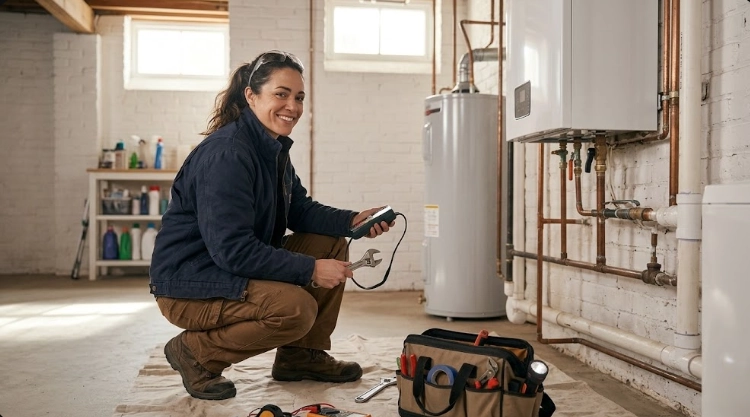
Natural Gas Piping Standards in Baisley Park Homes
In Baisley Park, Rochdale, and South Jamaica, natural gas fuels heating boilers, domestic water heaters, kitchen ranges, and clothes dryers. Because natural gas is volatile and combustible under pressure, gas distribution piping requires meticulous fabrication, approved fittings, and strict adherence to the New York City Fuel Gas Code. Substandard piping, corroded threaded unions, or unapproved flexible hoses represent severe life safety hazards.
Common Gas Piping Deterioration and Repair Needs
Over decades of service in damp Queen cellars, exterior moisture and corrosive atmospheric conditions degrade gas delivery systems:
- Corrosion on Threaded Black Iron Pipe: Schedule 40 black steel pipe is the standard material for indoor fuel gas. When exposed to basement humidity, chronic roof leaks, or condensation from uninsulated water lines, external rust pitting eats through pipe threads, causing microscopic gas leaks.
- Defective or Outdated Shutoff Valves: Obsolete brass ground-key cock valves often seize over time or develop leaks around their core nuts. Modern code requires full-port brass ball valves with designated lever handles at every appliance branch.
- Stove and Dryer Appliance Hookups: Installing gas stoves requires correctly sized, NYC DOB-approved semi-rigid corrugated stainless steel tubing (CSST) or rigid black pipe connections equipped with dedicated sediment traps (drip legs) directly upstream of the appliance control valve.
- Utility Lock-Off Remediation: If National Grid locks your gas meter due to an odor call or failing pressure, gas service will not be restored until a licensed contractor repairs all piping defects and certifies the system via a formal pressure test.
For gas-fired boiler maintenance or complete heating equipment modernization, explore our boiler repair in Baisley Park and boiler replacement services. If water heating equipment requires attention, review our water heater repair guide.
NYC Regulatory Requirements and Licensed Contractor Rules
In New York City, strict laws govern fuel gas systems to protect occupants and neighboring properties. All plumbing and gas work in NYC must be performed by or under an appropriately NYC-licensed master plumber, subject to applicable Department of Buildings (DOB) filing rules and inspections. Homeowners must never attempt DIY gas repairs, thread cutting, or valve replacements.
NYC Local Law 152: Applicability and Inspections
Enacted to safeguard multi-family and commercial buildings, New York City Local Law 152 mandates periodic visual gas piping inspections once every four years for covered structures across the five boroughs:
| Building Classification | LL152 Inspection Requirement | Exemption & Compliance Notes |
|---|---|---|
| 1- and 2-Family Private Homes (R-3) | Exempt from LL152 cyclical inspection | Standard DOB permits still apply for modifications/repairs. |
| Multi-Family Residential (3+ Units) | Mandatory inspection once every 4 years | Conducted by licensed master plumber; DOB GPS1 filing required. |
| Commercial & Mixed-Use Buildings | Mandatory inspection once every 4 years | Public corridors, utility rooms, and exposed piping surveyed. |
If an inspection identifies unsafe conditions or active leaks, the law requires immediate notification to the utility and DOB, with prompt corrective repairs executed under proper plumbing permits.
Pressure Testing and System Commissioning
Before any gas piping system can be safely placed into operation or reactivated by the gas utility, it must pass a rigorous pneumatic pressure test. All appliance shutoff valves are closed, and the piping is pressurized with air using a calibrated mercury gauge or digital manometer. The pressure must hold steady without dropping for the duration specified by DOB rules, verifying that every threaded joint and fitting is completely hermetic.
Frequently Asked Questions About Gas Line Repair
What should I do immediately if I smell natural gas or suspect a leak?
Evacuate everyone from the building immediately. Do not operate electrical switches, light fixtures, telephones, or appliances, and do not light matches or ignite any flame. Once safely outdoors and away from the structure, call 911 or your natural gas utility provider (National Grid) immediately. Never remain indoors to wait for a service technician.
Who is legally allowed to install or repair gas piping in New York City?
Under NYC administrative code and Department of Buildings regulations, all natural gas piping work, pressure testing, and gas appliance connections must be performed by or under the direct supervision of an appropriately licensed NYC Master Plumber.
What is NYC Local Law 152 and which buildings does it apply to?
Local Law 152 mandates periodic visual gas-piping inspections once every four years for covered buildings throughout New York City. The law applies to most multi-family and commercial properties, but specifically exempts one- and two-family private homes classified as occupancy group R-3.
How is a repaired gas piping system verified for leak-free safety?
Following gas pipe repair or installation, the isolated piping system undergoes a high-pressure air test using calibrated pressure gauges or manometers. The pipe is pressurized with air and monitored over a specified holding duration to confirm zero pressure drop before gas utility meters are turned on.