Steam Heat & Radiator Repair in Baisley Park, Queens
From knocking steam lines and hissing air vents to cold cast-iron radiators, targeted radiator repairs eliminate disruptive noises and balance heat across your entire home.
- Water hammer & banging pipe elimination
- Thermostatic and manual air vent calibration
- Supply valve replacement & pitch correction
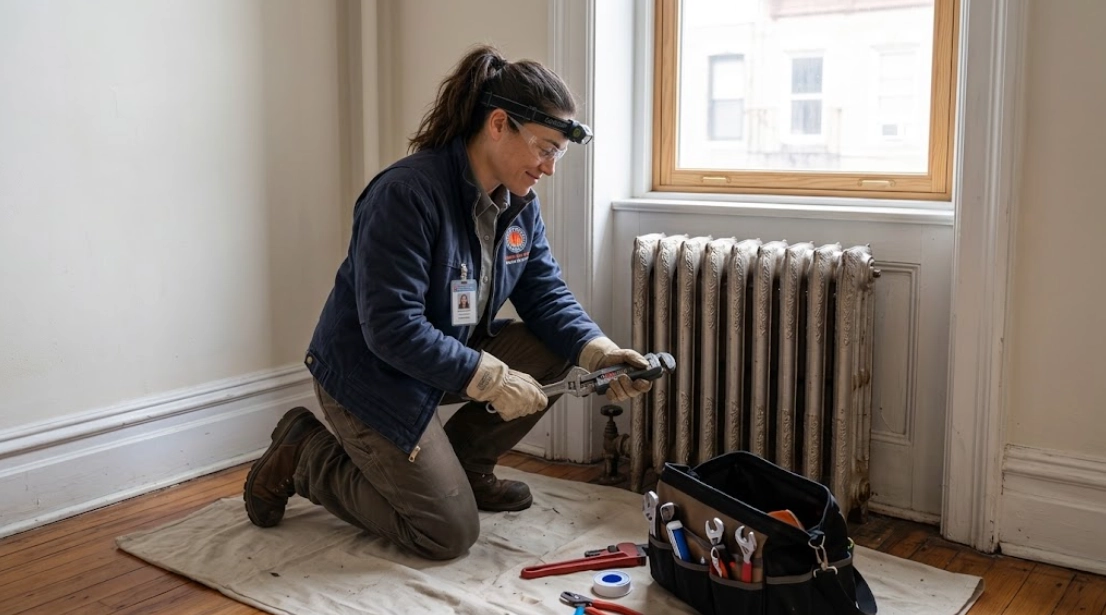
Understanding Steam Radiator Systems in Queens
A substantial proportion of two-story single-family homes and multi-family brownstones across Baisley Park, South Jamaica, and adjacent Southeast Queens neighborhoods rely on classic single-pipe or two-pipe steam systems. When balanced properly, cast-iron radiators provide steady, radiant warmth that remains comfortable long after the boiler shuts off. However, because steam relies on precise air venting and gravity drainage, a single failing valve or misaligned pipe can cause widespread noise, water leaks, and freezing rooms.
Diagnosing Cold Radiators and Uneven Heating
The most common complaint during cold weather is a radiator that stays icy cold while other rooms overheat. In a single-pipe steam system, steam cannot enter a radiator until the ambient cold air inside the cast-iron sections is completely pushed out through the radiator air vent. If the vent's internal needle or float has seized shut with rust or mineral deposits, the radiator becomes air-bound—acting as a sealed chamber that rejects steam entirely.
Uneven heating can also point to problems in the basement mains. Main line vents (frequently located at the ends of large steam headers before return drops) are designed to quickly dump hundreds of cubic feet of cold air so steam reaches vertical risers simultaneously. When basement main vents fail, radiators closest to the boiler roast while distant radiators never warm up before the thermostat reaches its setpoint. Evaluating your main venting is an integral part of boiler repair in Baisley Park.
Eliminating Water Hammer and Banging Steam Pipes
The violent, metallic banging often heard in steam systems—known as water hammer—is not merely an annoyance; it causes severe mechanical stress that loosens pipe joints and cracks radiator spuds. Water hammer occurs when steam traveling at speeds up to thirty miles per hour encounters standing pools of cool condensate water. The rapid condensation creates localized vacuums that violently propel slugs of water against pipe elbows and radiator valves.
Water hammer is usually traced to two primary causes:
- Partially Closed Radiator Valves: In a single-pipe steam system, steam flows up through the bottom valve while condensed water trickles back down through the exact same opening. If the shutoff valve is partially closed in an attempt to adjust room temperature, the narrowed opening traps condensate, resulting in immediate banging. Radiator valves on single-pipe systems must remain 100% fully open or 100% fully closed.
- Improper Pipe Pitch: Over decades, wooden floor joists settle, causing radiators or horizontal pipe branches to tilt backwards. If a radiator tilts away from its supply valve, water pools in the back sections. Re-pitching the radiator using sturdy shims beneath the radiator feet allows gravity to drain condensate back to the boiler.
Radiator Valve Packing Leaks and Replacement
Radiator shutoff valves experience severe thermal expansion and contraction cycles each winter. Over time, the graphite or PTFE packing around the valve stem degrades, allowing hot water droplets or steam vapor to leak onto finished flooring. In many cases, carefully repacking the stem gland with fresh graphite packing string will stop minor leaks without opening the piping.
However, when the valve handle spins freely without lifting the internal disc, or when the cast-brass valve body exhibits cracking, complete valve replacement is required. Replacing a stuck steam valve requires freeing the spud union from the radiator tapping without cracking the fragile cast iron. Professional technicians use specialized spud wrenches and penetrating compounds to ensure clean extraction without damaging historic radiator castings.
If frequent radiator leaking or low boiler water levels are causing repeated burner shutoffs, consider exploring our boiler replacement options or check our water heater repair services for domestic hot water troubleshooting.
Frequently Asked Questions About Radiator Repair
Why is my steam radiator banging or knocking loudly when the heat kicks on?
Loud banging (water hammer) happens when incoming high-velocity steam collides with pockets of pooled condensate water trapped inside the radiator or steam supply pipe. This is frequently caused by a partially closed shutoff valve, a sagging horizontal pipe with improper pitch, or a malfunctioning radiator air vent.
What causes a radiator to stay completely cold while other rooms get hot?
A cold radiator in a steam system is almost always air-bound. If the radiator's air vent fails to open and purge trapped air, steam cannot physically enter the cast-iron body. Other common causes include a seized supply valve or a clogged main-line air vent down in the basement.
Why is steam hissing loudly or spitting rusty water from the radiator vent?
Radiator air vents contain a bi-metal disc or float mechanism that should snap shut when steam touches it. If mineral scale or age causes the float to stick open, steam and dirty condensate blow continuously into the room, causing humidity damage, peeling plaster, and unnecessary boiler water loss.
Can a leaking radiator valve stem be repacked or must the whole valve be replaced?
Minor packing leaks around the valve stem can often be remedied by tightening the packing nut or renewing the Teflon/graphite valve packing cord. However, if the brass valve body is cracked, the internal seat is deeply grooved, or the spud union is corroded, complete valve replacement is the appropriate long-term solution.