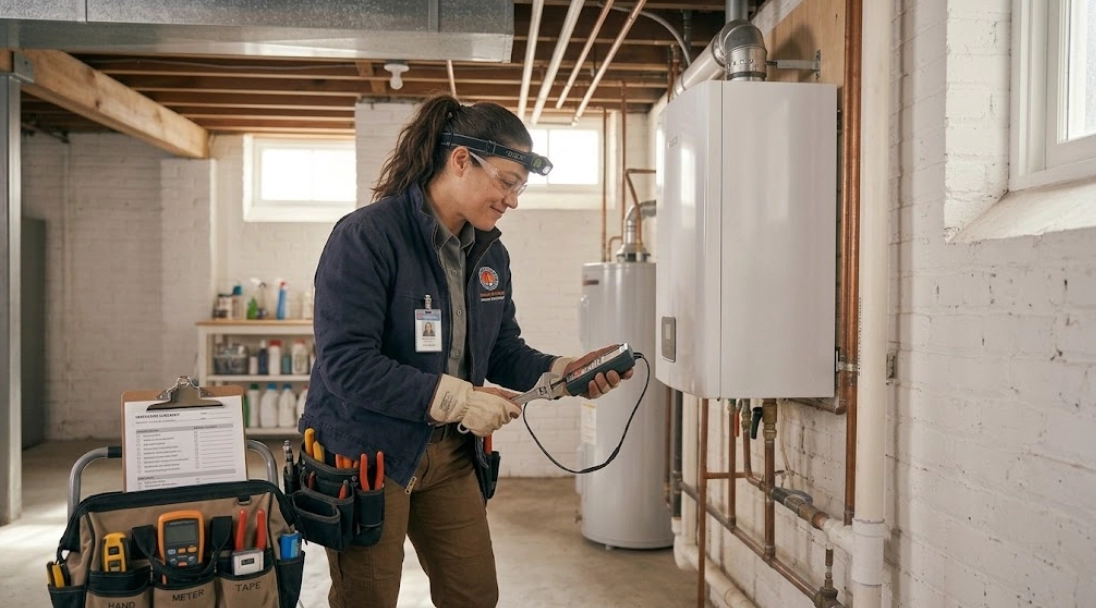
Heating System Diagnostics for Baisley Park Homes
Residential properties in Baisley Park and neighboring Southeast Queens neighborhoods—bordering landmarks such as Baisley Pond Park, Guy R. Brewer Boulevard, and the residential perimeter of Rochdale Village—rely heavily on robust central heating plants to endure New York City’s prolonged winter chill. The neighborhood features a mix of classic detached frame single-family houses, semi-attached brick two-family residences, and multi-unit dwellings.
When an unexpected cold snap strikes, facing an interruption in heat is stressful. Searching for dependable boiler repair Baisley Park Queens requires a technician who understands both historical steam loop dynamics and modern hydronic heating configurations. Whether you need an urgent no heat boiler repair Baisley Park Queens or routine seasonal maintenance to quiet clanging pipes, our experienced mechanics arrive equipped to diagnose burner assemblies, electrical controls, and mechanical safety limits.
No-Heat Emergencies
Immediate systematic diagnosis of thermostats, line-voltage power, 24V control transformers, burner ignition modules, and low-water safety limits.
Steam Surging & Hammering
Resolution of violent pipe banging, foaming boiler water, clogged pigtail siphons, and erratic water lines in single-pipe steam systems.
Hydronic Pressure Failures
Troubleshooting leaking 30-PSI relief valves, water-logged expansion tanks, failed auto-fill regulators, and seized circulator pumps.
Common Signs That Your Boiler Needs Professional Attention
Heating equipment rarely breaks down without warning. Homeowners who observe small operational changes can often resolve problems before experiencing complete system shutdown:
- Burner Short-Cycling: If your gas boiler ignites, fires for thirty seconds, and abruptly shuts down repeatedly, the system is short-cycling. This often stems from an oxidized flame sensor, an oversized burner, or a miscalibrated pressuretrol.
- Discharge from Safety Relief Valve: If water pools around the base of your heating plant from the discharge tube, your system is exceeding safe operating limits (15 PSI for steam, 30 PSI for hydronic) or the valve seat has corroded.
- Persistent Low-Water Lockouts: A float or electronic low-water cutoff trips when water levels fall below the minimum threshold. If you must manually add water weekly, you have an unaddressed system leak.
- Unusual Basement Noises: Screeching indicates failing circulator bearings; rumbling or kettling points to heavy calcified scale buildup inside the cast-iron heat exchanger passages.
- Uneven Room Heating: When first-floor radiators become scorching hot while second-floor bedrooms remain cold, air vents are clogged or the piping pitch has settled.
Understanding the Differences: Steam vs. Hot-Water Boilers
Many homeowners in Queens are unsure whether their heating system operates on steam or hot water. Identifying your equipment type helps clarify troubleshooting:
When servicing a steam boiler repair Baisley Park Queens, our technicians focus on vapor dynamics. Steam systems generate vapor at extremely low pressures (0.5 to 1.5 PSI). The boiler requires an open sight glass to monitor the water meniscus, a pigtail siphon tube beneath the pressuretrol to prevent hot steam from burning out the pressure switch, and balanced air vents across all cast-iron radiators.
In contrast, a hot water boiler repair Baisley Park Queens involves a closed, fully pressurized loop filled with water. A circulator pump forces heated water through copper fin-tube baseboards or cast-iron convectors. Service for hydronic equipment centers on maintaining 12 to 18 PSI operating pressure, bleeding air from upper radiator loops, checking zone valve actuators, and recharging diaphragm expansion tanks.
Common Causes When a Boiler Is Not Working in Baisley Park
Discovering your boiler not working Baisley Park Queens usually results from one of several common mechanical or electrical disruptions:
- Defective Low-Water Cutoff (LWCO): If mud or boiler scale accumulates inside a float chamber, the float sticks in the down position, keeping burner power shut off even when the boiler is full of water.
- Thermocouple & Electronic Ignition Failures: On older pilot-light boilers, a worn thermocouple cuts off the gas supply. On electronic systems, cracked ceramic igniters or dirty flame rectification rods lock out the control module.
- Clogged Pigtail Siphons: On steam units, the looped brass pipe beneath the pressuretrol easily clogs with rust flakes. This traps pressure against the control switch, tricking the boiler into believing it is satisfied.
- Seized Circulating Pumps: On hydronic systems, failing motor capacitors or worn bronze impellers prevent heated water from leaving the basement, leaving upstairs rooms cold while the boiler gets overheated.
Emergency Gas Odor or Carbon Monoxide Safety
If you smell natural gas (a pungent rotten-egg odor), hear hissing near pipe fittings, or your carbon monoxide alarm sounds, leave the home immediately. Do not flip light switches, do not use phones indoors, and do not attempt DIY valve adjustments. Call 911 or the National Grid Gas Emergency Line from outside the building.
How an Inspection and Diagnostic Visit Works
When you schedule a gas boiler repair Baisley Park Queens with our local team, our technicians follow an orderly mechanical inspection procedure:
Safety Verification
We check gas line shutoff cocks, test chimney flue draft, and ensure clear combustion air intake before starting electrical testing.
Electrical Controls
Our technicians test line-voltage power, 24V thermostats, transformer limits, high-limit aquastats, and ignition sequencing.
Hydraulic Analysis
We test the low-water cutoff, inspect the sight glass, verify pressure relief valve integrity, and measure static operating pressure.
Targeted Repair
Defective controls, valves, relays, or pumps are replaced with heavy-duty commercial-grade components meeting NYC Department of Buildings codes.
Repair vs. Replacement: Evaluating Your Equipment Options
Cast-iron boilers in Southeast Queens can operate reliably for twenty to thirty years when maintained with regular flushing and clean water. Minor issues—such as replacing an automatic water feeder, repacking a leaking valve stem, installing a new circulator, or replacing an electronic ignition control—are cost-effective repairs that extend equipment life.
However, when a boiler block develops internal cast-iron section cracks, exhibits persistent pinhole leaks between push nipples, or suffers from severe scale decay that compromises heat transfer, continuing to repair the unit is unsafe and uneconomical. In those situations, exploring our code-compliant boiler replacement service provides improved energy efficiency and reliable winter comfort.